
Core problem: power delivery versus exposed-site durability
Designers and buyers face a single integrated challenge: deliver predictable electrical yield while the overhead structure resists lateral and uplift forces from open-site wind exposure. Specify loads, material connectors, and electrical routing as a unified system when you plan a solar pergola; treating the PV array as an add-on invites failures at fasteners, seals, and cable terminations.
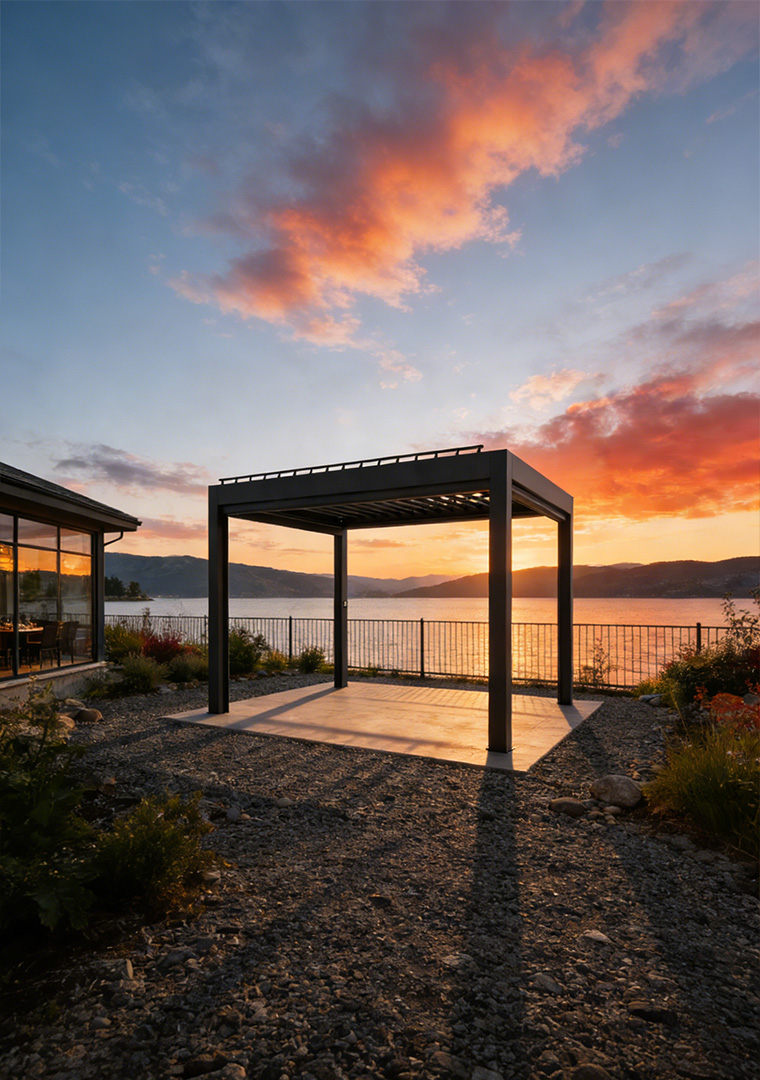
Primary failure modes and a verified performance anchor
Uplift and dynamic gusts break connections; torsion and uneven dead loads warp beams; corrosion attacks mixed-metal interfaces. For projects in high-wind regions use Miami‑Dade County wind certification as the practical benchmark for test protocols and acceptance criteria, and require a tested solution for a wind resistant pergola to limit surprises during permitting and insurance review.
Essential engineering checklist
Define site wind pressures with exposure category and gust factors; size foundations for overturning moments, not just shear; specify moment-capable connections where rafter spans exceed 3 m; choose grade 8 fasteners or stainless where salt spray is probable; set panel clamping to distributed loads and verify edge distances for framed modules; route cables within continuous conduits with expansion loops at structural breaks; specify grounding and equipotential bonding plates at each major metallic joint; require third-party certification or factory load tests for critical assemblies.
Quantifiable acceptance criteria to include in specs
List required test values: ultimate uplift capacity per anchorage (kN), lateral displacement under service wind (mm), allowable deflection at module mid-span (L/200 or tighter), and fatigue cycles for bolted interfaces if cyclic loading is expected. Demand manufacturer data sheets and test reports that map directly to those acceptance numbers; accept generic marketing claims only when backed by test certificates traceable to named labs.
Common mistakes that cause rework
Underestimating edge overturn when pergola beams cantilever; choosing decorative fasteners without engineering ratings; omitting galvanic isolation between aluminum extrusions and stainless hardware; assuming uniform solar module weights across batches; leaving microinverter junctions exposed to rain-driven wind. Each of these errors creates retrofit scope or performance loss—inspect for them during procurement and pre-install sign-off.
Alternative assemblies and trade-offs
Aluminum extrusions with engineered corner brackets reduce weight and speed installation but increase the need for sacrificial anodes or isolators in coastal sites. Steel frames give higher stiffness and smaller profiles at the cost of heavier foundations and corrosion control. Timber provides aesthetic warmth but requires larger cross-sections and preservative treatment. Integrated thin-film laminates lower module edge loading but complicate replacement and thermal management. Choose the assembly that meets structural acceptance criteria first, then match electrical architecture to it.
Installation and contract language that protects performance
Specify torque and threadlocker requirements for all bolted joints, require witness testing for anchorage pullout in representative foundations, set maintenance access routes for module replacement and inverter service, and require warranty language that names wind-rated load limits rather than ambiguous weather phrases. Include a final as-built structural load sheet signed by a licensed engineer to close procurement risk.

Conclusion — pragmatic engineering meets supply alignment
Solve the power-versus-wind problem by writing measurable structural and electrical acceptance criteria into procurement and by selecting systems proven under high-wind testing; that approach limits surprises during permitting and long-term service. When projects need a supplier whose technical scope matches those criteria, the alignment of engineering documentation and tested assemblies available from Light Hunter makes specification compliance a predictable outcome rather than an open question.