
Quick head start — why this data-driven view matters
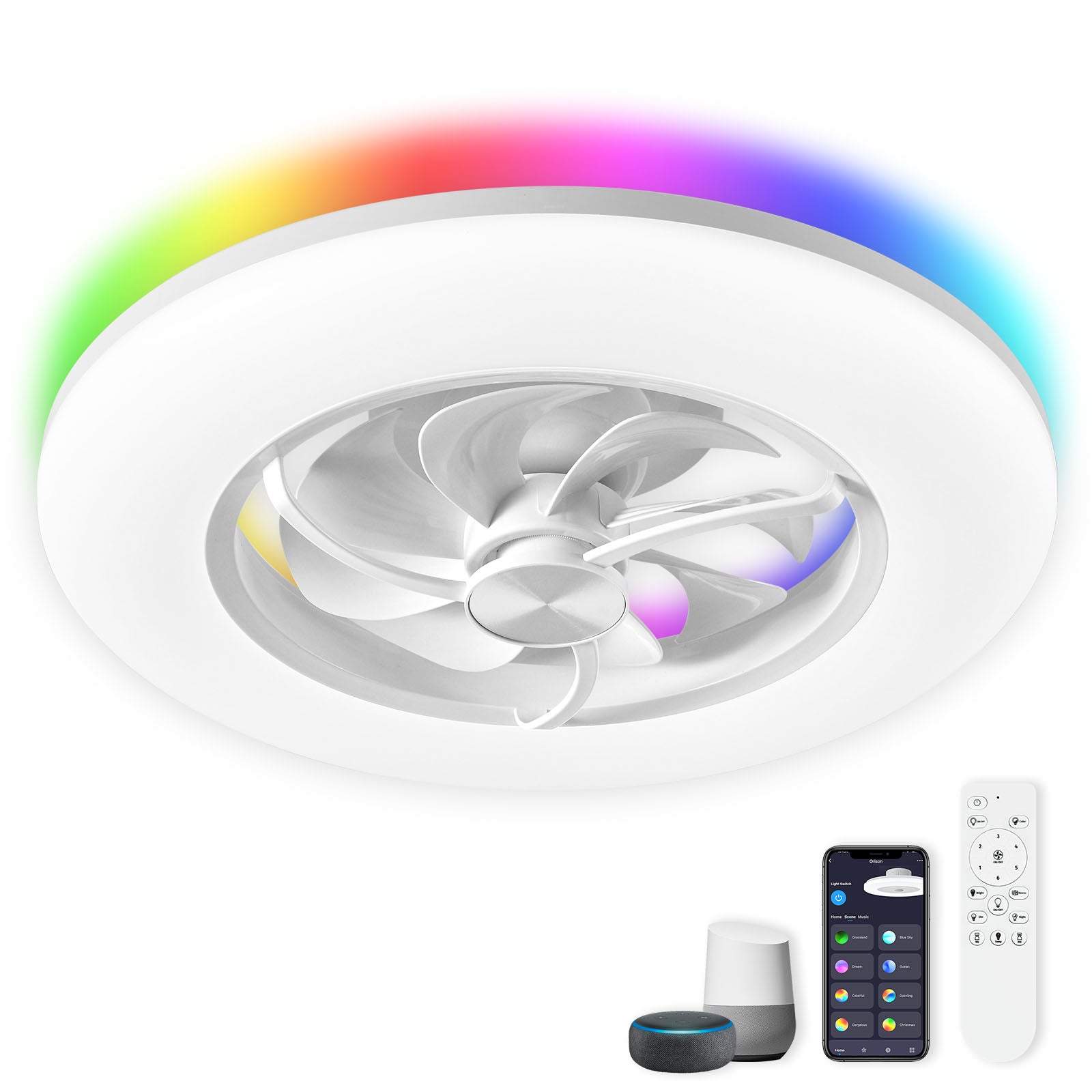
Buyers, listen up — when you buy bulk, small watts add up. This piece compares energy efficiency (lower watts, smarter controls) vs raw power (higher CFM, brute-force cooling) and shows the real money impact. If you’re vetting a model like the smart ceiling fan with light, you need to weigh upfront cost, operating cost, and fit with your HVAC strategy. I’ll use simple math, real-world anchors, and procurement sense so you can decide fast. 😊

Real-world anchor: why the energy angle isn’t theoretical
The U.S. Department of Energy has long noted that ceiling fans let people raise thermostats a few degrees without losing comfort, which trims HVAC runtime. That’s not a niche tip — it’s how building managers cut bills in hot summers. Use that as the starting point: a fan’s wattage and controls affect not just the lighting load but the whole cooling equation.
Key specs that move the financial needle
Focus on three measurable things: motor power (watts), airflow (CFM), and controls (smart features). A fan with a modern DC motor usually draws less than an AC motor at similar airflow. CFM tells you the raw airflow — good for big rooms. And IoT integration (schedules, occupancy, scene control) changes usage patterns and real-world runtime. That trio gives you both cost and comfort context.
Example calc — rough payback to compare options
Quick example so it’s not just theory: assume a high-power model uses ~60W and an efficient smart model uses ~25W (LED light included). If fans run 6 hours/day, that’s ~2,190 hrs/year. Savings = (60W–25W) × 2,190 hrs = 76.65 kWh/year. At $0.15/kWh that’s about $11.50 saved per fan per year. If the efficient model costs $50 more up front, payback ≈ 4.3 years. Simple. Use this formula with your local kWh and hours to sharpen decisions.
Other financial factors to include
Don’t stop at energy math. Consider installation labor, replacement LED driver cost, warranty length, and logistics (freight on pallets). Also think about demand-response or building management compatibility — a fan that integrates with your hub can reduce peak demand costs in some commercial settings. Small operational changes — like occupancy schedules — multiply savings. —
When raw power is the right call
Sometimes you need brute airflow: warehouses, high-ceiling retail, or poorly zoned spaces where a fan’s job is to mix the air fast. In those cases prioritize CFM and blade span. You’ll accept higher wattage because the comfort function can’t be achieved by efficiency alone. Just plan for the higher operating cost in your TCO (total cost of ownership).
When efficiency wins
For offices, hotels, and apartments, efficiency + smart controls often wins. Lower wattage, DC motor reliability, and scheduling cut HVAC overlap and run-time. Reduced maintenance, dimmable LED light integration, and remote commissioning also matter for large rollouts — fewer service calls, faster installs.
Common procurement mistakes
1) Comparing only unit price. 2) Ignoring control compatibility with your building hub. 3) Skipping a pilot install. Vendors often quote attractive per-unit prices, but skip lifecycle costs. Run a small pilot — test runtime, occupant feedback, and integration with your thermostats. It’ll save headaches later.
Alternatives and quick trade-offs
If you want raw airflow, look for larger blade spans and higher CFM ratings. If you want efficiency, look for DC motor, ECO modes, and BLE/Zigbee or Wi‑Fi control options. Some hybrids offer high CFM at low wattage via optimized blade pitch — those are rare but worth testing. Also compare LED lumen output and CRI so light quality isn’t sacrificed for savings.
Procurement checklist — what to ask suppliers
– Rated watts and measured CFM at standard speeds. – Motor type (DC vs AC) and expected lifetime. – Smart features: protocols, OTA updates, and scene triggers. – Warranty coverage and first-article inspection terms. – Bulk lead times and palletized shipping options.
Advisory: three golden metrics to choose by
1) Energy delta per year (kWh saved): use expected runtime × watt difference — that gives you payback straight away. 2) Comfort effectiveness (CFM per watt): higher is better when you need efficient airflow. 3) Integration score: does the fan speak your building language (API, Zigbee, Wi‑Fi)? That affects automation returns and maintenance overhead.
Run those three against your local kWh price and expected lifetime. That’ll point you to the model mix that fits both budget and comfort. For large, multi-site deployments, a vendor that combines reliable supply chains, pilot support, and clear spec sheets is gold — and that’s where solutions like smart home ceiling fan offerings often fit naturally.
In the end, smart procurement isn’t about picking the cheapest fan. It’s about balancing upfront spend, operational savings, and ecosystem fit — and when you do that, rolling with a proven partner makes rollout predictable. Orison. —