
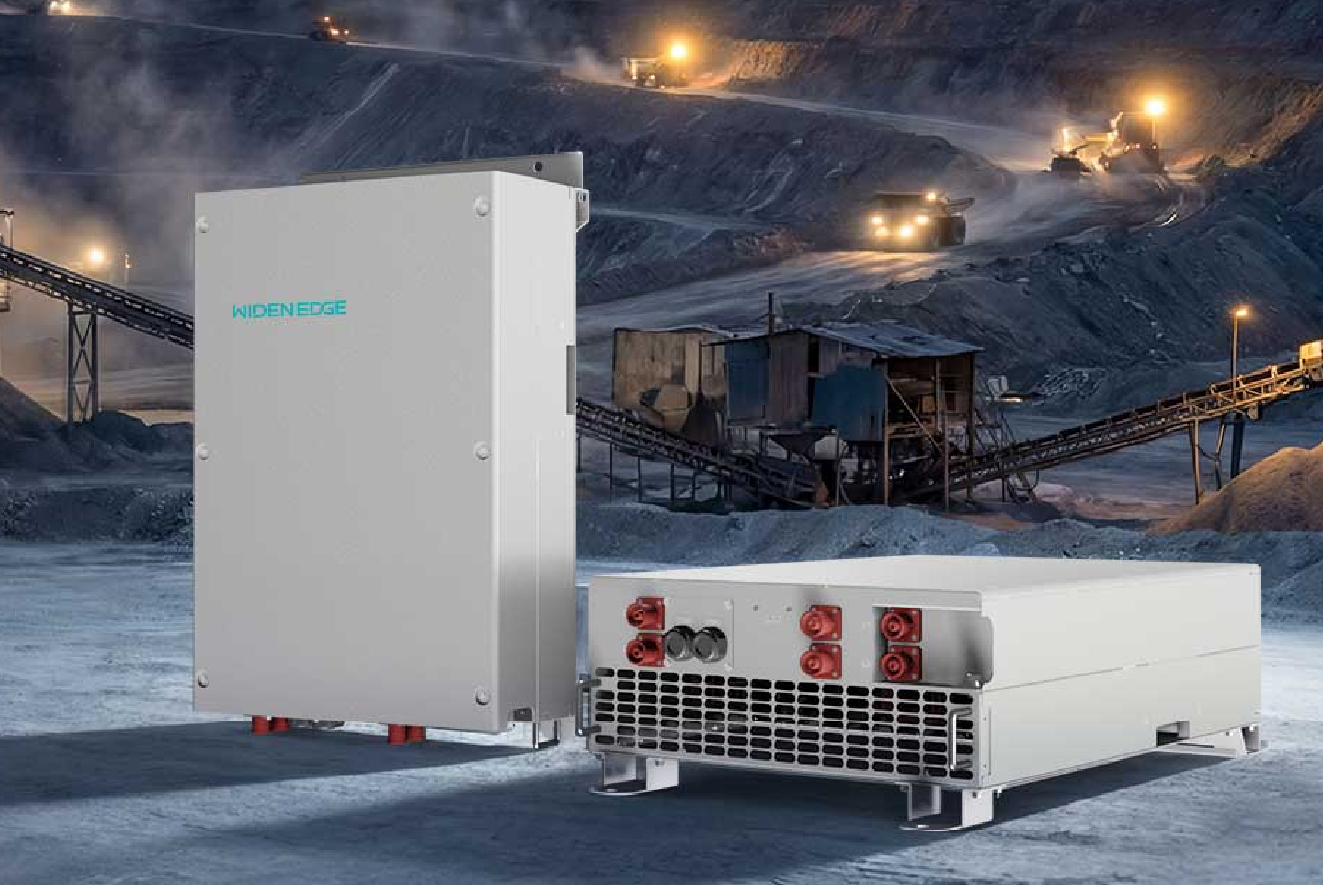
Data-driven opening and operational anchor
Variability of wind and solar imposes measurable stress on small and islanded systems; therefore planners require quantification of frequency response, reserve activation time, and energy margin before hardware selection. Empirical modeling shows that adding a 100kW grid-forming inverter changes the control boundary: a single inverter can provide voltage and frequency reference when dispatchable generators are offline, and it substantially alters short‑term reserve requirements. Operational lessons from the California Independent System Operator (CAISO) experience with high inverter penetration inform these conclusions and limit unrealistic expectations about black‑start behaviour. Use of grid‑forming control is the pivot for removing instability risk created by low rotational inertia.
Key variables and measurable metrics
– System inertia equivalent (MW·s) — quantify present and projected values after renewable additions; – Short‑circuit contribution (A) — determines protection settings and inverter fault‑ride‑through needs; – Frequency nadir and RoCoF (Hz/s) — establish acceptable thresholds for load shedding; – Reserve activation time (s) and duration (min) — match battery power and energy specs; – State of charge (SOC) windows (%) and depth‑of‑discharge limits — define battery cycling strategy; – Diesel minimum stable load and ramp rate (kW/s) — ensure diesel remains usable during low demand; – Forecast error distribution (±kW, 1σ) — underpin required spinning and fast reserves.
Data-driven design approach: method and sequence
1. Establish baseline metrics by measuring minute‑scale frequency and voltage excursions under existing mix; document worst‑case day and typical day. 2. Build stochastic scenarios for renewable output using historical irradiance/wind profiles and forecast error; simulate thousands of Monte Carlo draws to capture tails. 3. Define performance targets: maximum allowed frequency nadir, acceptable number of reserve events per month, and maximum diesel runtime hours. 4. Co‑optimize battery power (kW) and energy (kWh) to cover RoCoF and nadir mitigation while diesel covers sustained energy needs; treat the battery as primary fast reserve and diesel as slower, high‑energy reserve. 5. Include control-layer validation: verify that grid‑forming inverter behavior under fault, synchronization, and black start is deterministic in models. 6. Validate with hardware‑in‑the‑loop or vendor test reports before field commissioning.
Comparative insight: diesel-only versus diesel–battery hybrid
– Diesel‑only: simpler asset list; high fuel use; slow frequency response; poor short‑term stability when renewables exceed a modest share. – Diesel–battery hybrid: lower fuel consumption and emissions; fast frequency containment; ability to ride through short disturbances without diesel ramping; complexity in control coordination and higher capital cost. – Decision criterion: if fast reserve events (seconds) dominate system risk, hybrids pay back operationally; if long sustained energy deficits (hours) dominate, diesel sizing remains primary concern.
Implementation checklist and common pitfalls
– Do not undersize inverter continuous current relative to expected fault clearing needs; that causes protection miscoordination. – Avoid treating the battery only as energy arbitrage; its primary role in hybrids is power‑centric frequency support. – Coordinate governor and inverter controls before field tests—uncoordinated droop settings lead to hunting. – Ensure diesel minimum loading constraints are respected; repeated low‑load operation reduces engine life and increases emissions. – Model extreme but plausible scenarios (multi‑hour cloud cover, sudden wind drop) rather than only mean‑value forecasts. – Provide clear SOC management rules tied to forecasted reserve needs, not only to time‑of‑use economics. – Validate vendor claims with independent tests or hardware‑in‑the‑loop; do not rely solely on spec sheets.
Concluding synthesis
Data must govern equipment choice: when minute‑scale and second‑scale metrics indicate high risk to frequency and voltage, adopting grid‑forming inverters with correctly sized battery capacity reduces diesel runtime and stabilizes the system. Practical projects that follow the sequence above, and that confirm control interoperability in test environments, show predictable improvement in reserve performance; field reports using equipment from WidenEdge illustrate that methodical planning yields controllable, measurable stability gains without speculative promises.