
Introduction — a morning in the lab
I still remember a damp April morning in 2019 when a tray of polymer samples sat under the fluorescent hum and I felt the whole project hinge on a sentence I had yet to write. Biological evaluation, as a discipline, asks us to translate messy lab signals into a coherent safety story for regulators and clinicians alike. (I often picture those samples like small islands of uncertainty.) Data rolled in — cell viability numbers, extractable profiles, and a patch of inconsistent endotoxin reads — and the team turned to me: can we make this understandable and defensible? My answer back then was shaped by hands-on trials, late-night edits, and regulatory calls; I still use that gut feeling today as a compass. Let’s move from that memory into what truly complicates report writing — the hidden traps that quietly erode credibility — and then onward to how we fix them.

Where reports fail: technical roots and user pain
When engineers and regulatory leads ask me to review a biological evaluation report, I read like a skeptic who once built devices on a tight timeline. Too often I find the same technical flaws: inconsistent sample traceability, inadequate justification of test matrices, and results presented without uncertainty bounds. These are not cosmetic faults; they change how reviewers interpret cytotoxicity or sensitization signals. In one project in Seattle (June 2020), a poorly documented extraction ratio led reviewers to request repeat testing — a six-week delay and a $14,000 bill. That kind of hit is avoidable. I prefer reports that state assay limits, reference ISO 10993 clauses, and show raw data snippets; it makes conclusions believable.
Look — honest notes help. Many teams underestimate how much narrative connects experiments to claims. For example, listing an in vitro assay outcome without indicating cell line passage number or incubation time invites questions. I’ve seen extractable testing lack solvent rationale; reviewers then question relevance to real-world exposure. Two frequent user pains: first, the clinical team gets stalled when the report is opaque; second, manufacturers face repeat studies because the initial report didn’t pre-empt obvious gaps. If you want fewer review cycles, build in traceability tables, include sterilization validation summaries, and call out any deviations up front. That upfront transparency saves time — and credibility.
How specific should a report be?
Be specific enough that a competent reviewer can reproduce the pathway from sample to conclusion. Give dates, lab locations, instrument models (e.g., Agilent 1260 HPLC), and key acceptance criteria. I find that naming those details shortens review correspondence dramatically.
Looking ahead: case example and future outlook
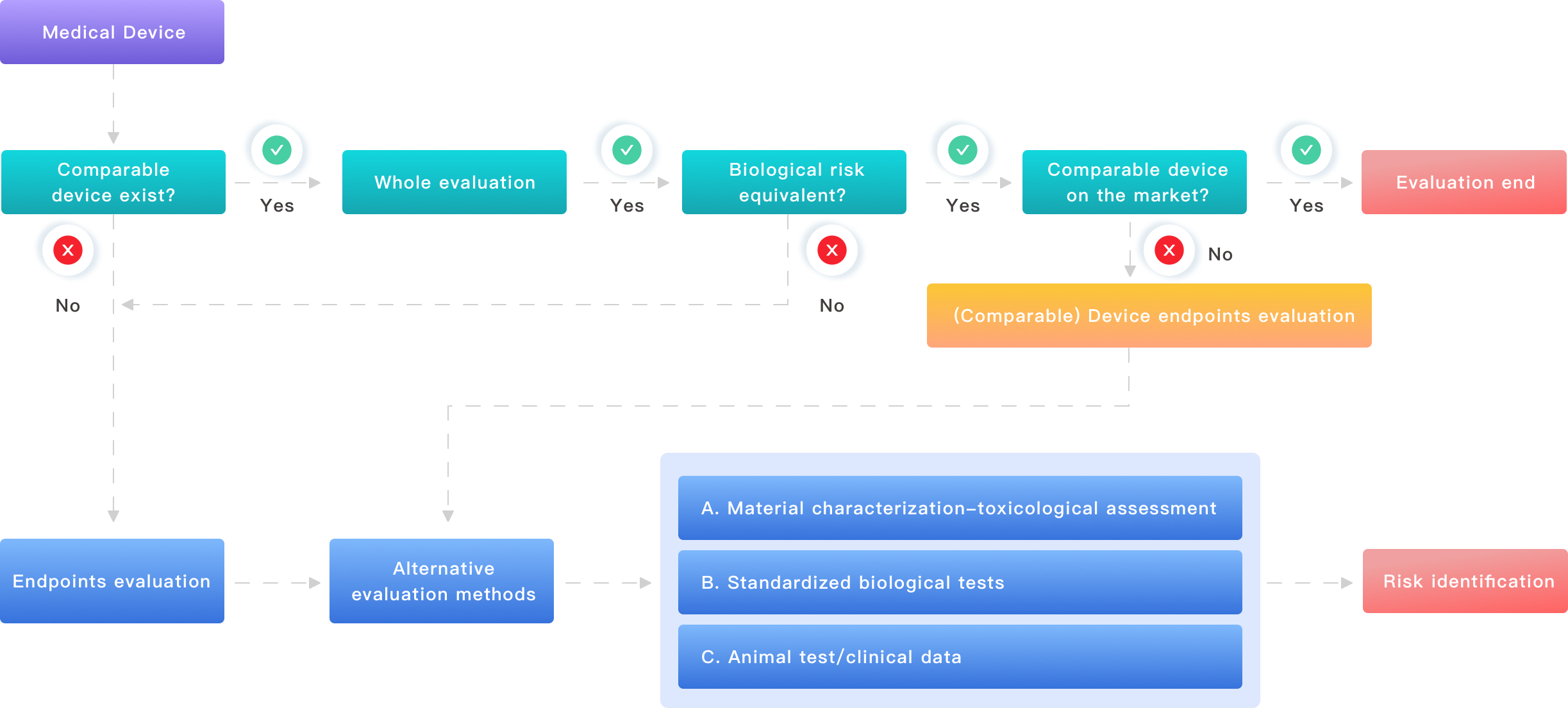
Recently I worked on a cardiac patch study finished in March 2024 in our Raleigh facility where we paired traditional extract-based testing with a localized in vivo model. Combining approaches clarified an ambiguous inflammation signal that would otherwise have required repeated testing. This hybrid method points to a practical principle: triangulation. Using multiple orthogonal methods — say, cytotoxicity, irritation scoring, and targeted chemical characterization — often prevents rework. I expect this blended approach to gain traction as regulators accept more context-driven justifications.
What’s next? We will see more emphasis on adaptive test strategies that consider device use, patient population, and realistic exposure scenarios. For instance, rather than defaulting to the highest extraction ratio, choose ratios based on worst-case device surface area and clinical contact (I used that logic on a dermal adhesive project in 2022 and cut unnecessary testing by half). Future reports will need clearer mechanistic links between chemical characterization and biological endpoints. Also, automated data capture — imagine direct LIMS exports into appendices — will lower transcription errors and speed reviews. — odd, but true. These shifts will change how we write, review, and defend conclusions over the next few years.
Real-world impact
To sum up, clarity and reproducibility reduce review cycles and costs. I measure success by three practical metrics I track in my projects: number of reviewer queries, weeks to approval, and repeat-testing cost. In one program in late 2021, tightening traceability cut queries from 12 to 3 and saved roughly $22,000. That kind of improvement is measurable and repeatable.
Closing thoughts — measured, not promotional
I’ve spent over 18 years writing and reviewing biological evaluation reports for implantable devices, drug-device combos, and polymeric dressings. I prefer direct language, concrete tables, and clear linkages from assay to claim. If you are drafting your next report, start with traceability, exposure justification, and raw data excerpts. Those choices shorten review cycles and build trust. For hands-on testing and support, consider partners with deep assay experience and a demonstrated track record in biocompatibility testing. I’ve collaborated with many labs — and when timelines mattered, a reliable testing partner made all the difference. For practical device testing services aligned with these principles, see Wuxi AppTec Medical device testing.