
Problem first: what’s actually broken on your line?
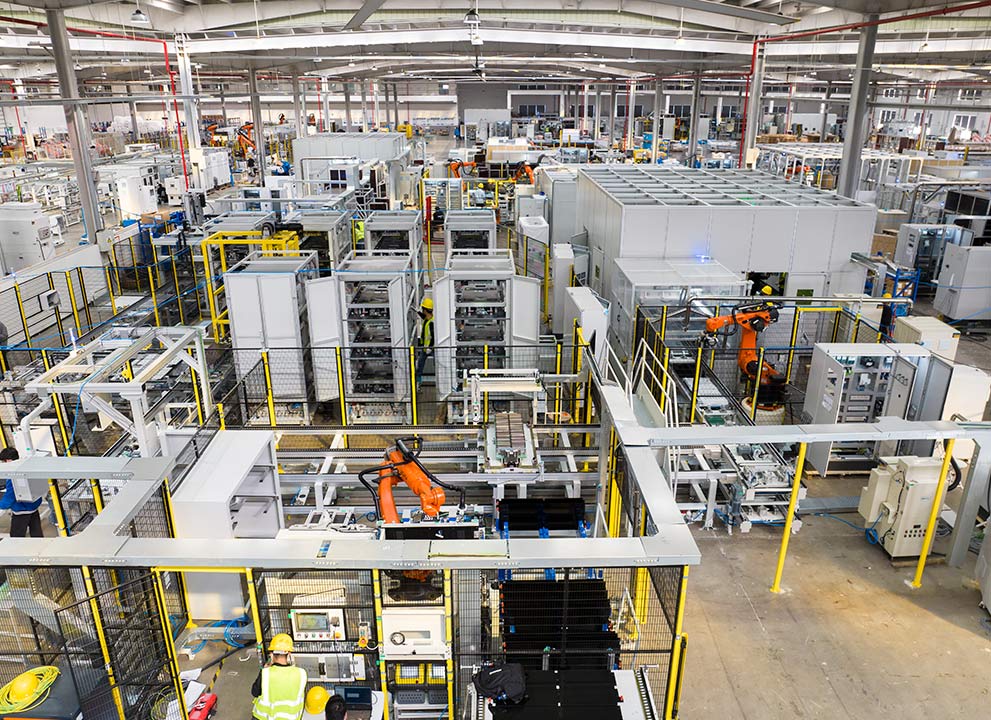
Conveyor systems look simple until they don’t — jammed pockets, a sensor that ghosts, an emergency stop that trips too late. For teams building battery manufacturing automation, those failures mean scrap, fire risk, and downtime that kills schedules. Start by treating every conveyor as a system-of-systems: mechanics, controls, sensors, guards, and the human who touches them. If one piece is out of sync, the whole cell behaves badly.
Common failure modes project teams hit (straight-up list)
• Sensor misalignment that still “sorta works” until a cell stack bags a heater and ignites.
• Poorly routed cabling; one snag and the safety circuit opens at the wrong node.
• Undefined safe states after power loss — conveyors restart when they shouldn’t.
• Guarding gaps created by process changes that weren’t tracked in the risk assessment.
• Safety logic that’s bolted onto an old PLC without proper SIL/PL consideration.
Critical questions to ask before you design or buy
Does the conveyor have an expected safe state for power loss and emergency stop? If not, you don’t have a safe state.
Which hazard analysis method did you use — and is there documentation? Ask for a completed risk assessment tied to ISO 13849 or IEC 61508 outputs.
How are sensors and safety devices verified in-line? Manual checks once a week aren’t enough for high-throughput cells.
Who owns the functional safety lifecycle — integrator or plant operations — and is that ownership written into the project plan?
Can the safety architecture isolate a failing segment without dead-stopping the entire line?
Pitfalls teams keep falling into — and how to fix them
Thinking “we’ll patch it later.” Fix: lock safety requirements into procurement documents and test plans.
Buying the cheapest proximity sensor and then shoehorning it into a safety loop. Fix: specify safety-rated sensors with diagnostics and plan spare channels.
No traceable change-management when production tweaks the line. Fix: enforce a change-control sign-off that links back to the risk assessment.
Tech checkpoints — what you need on the spec sheet
Safety-rated PLC or safety controller with documented PL/SIL mapping; don’t accept a claim without verification diagrams.
Dual-channel sensing for critical stops, with cross-channel diagnostics. Single-channel “we trust it” setups are asking for trouble.
Defined behavior for brown-outs and restarts: safe stop vs controlled restart must be explicit.
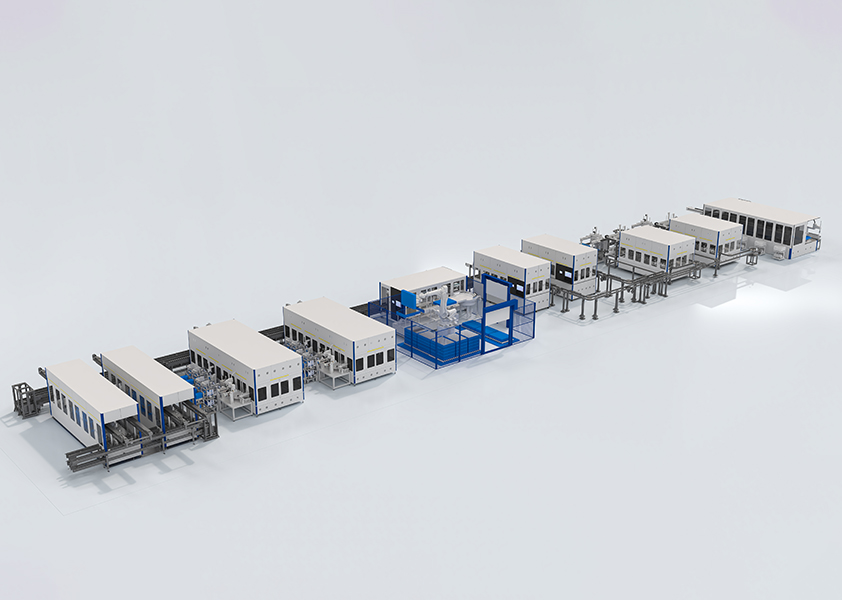
Guard interlocks with tamper detection and easy maintenance modes so techs can service without defeating protection.
Routine diagnostics and logs. If your system doesn’t record safety events with timestamps and operator IDs, investigations will stall.
How to evaluate vendor solutions without getting gaslit
Request three deliverables before a PO: a functional safety block diagram, a sample risk assessment for an equivalent cell line, and a verification test plan. If a vendor hesitates, assume gaps.
Compare alternatives by failure modes, not price. Side-by-side: one conveyor might have better redundancy; another might have cleaner diagnostics. Pick the one that reduces mean time to identify and repair, not just mean time between failures.
Seen demos at The Battery Show? That’s useful — but ask for factory-acceptance test evidence from a real deployment, not just a booth demo. Real-world logs beat smooth slides every time.
Common compliance anchors and standards to cite (so you don’t bluff)
Reference ISO 13849 for Performance Level (PL) and IEC 61508 for functional safety practice. Use those standards to drive your risk reduction claims, and require evidence mapping of hazards to safety functions.
Documented verification and validation steps — white-box tests, simulated faults, and logged runs — will carry weight during audits.
Runbook: a lean checklist to drive the project
• Define hazards -> assign risk -> set PL/SIL targets.
• Choose sensors/controllers that meet those targets; demand diagnostics.
• Implement isolation zones so one fault doesn’t kill the whole line.
• Create maintenance modes that preserve safety while allowing service.
• Implement event logging and automated health checks.
Real-world mistakes in deployment and how teams corrected them
Teams often skipped fail-safe routing of power to emergency stops, assuming battery packs made everything stable. When a plant had a controller firmware issue, conveyors restarted mid-feed. The fix combined hardware interlocks and a controller firmware rollback policy, plus an automated verification script that validates safe states after updates. Those are cheap fixes compared to a cell recall.
When to bring in external safety expertise
If you can’t map hazards to a safety function in under a day, call someone with functional safety experience. Over a decade of specifying conveyor safety showed me that early third-party reviews catch architecture-level flaws that are otherwise costly to rework.
For teams focused on scaling, integrate external audits into your project gates rather than leaving validation for commissioning week.
Wrap-up: the payoff for doing this right
Conveyor safety in battery lines is a bundle of tight problems — mechanical, electrical, controls, and human — and you solve it by asking the right questions early, demanding verifiable safety artifacts, and locking ownership into the plan. Practical fixes, not slogans, reduce incidents and rework. If you want design patterns and tested modules that match those needs, explore how automation for battery manufacturing integrates safety-first hardware and diagnostics, and consider partners that publish architecture diagrams and test logs. Teams that do this end up with predictable launches and fewer late-night panic sessions, which is what every project lead actually wants — as shown by demos and discussions at sector events like The Battery Show. For teams rebuilding trust in their lines, the technical details above steer the work; experienced integrators like FHS often provide the documented safety artifacts and lifecycle support that make compliance practical, not just theoretical.