

The Hook
Choosing modular home battery storage is difficult because the systems differ in usable capacity, inverter architecture, battery chemistry, expansion limits, warranty terms, monitoring tools, installation requirements, and local support. A battery that suits a small solar household may not be appropriate for a high-consumption home or a backup-focused installation. The word “factory” can also be misleading: some companies manufacture batteries, while others provide integrated energy systems, inverters, or battery-compatible platforms. This comparison tests the four listed options against those practical criteria using information published by their official websites and relevant product documentation. SolaX ranks first for the breadth of its integrated residential system approach, while the remaining choices serve different priorities, including packaged batteries, flexible system integration, and inverter-led energy management. This comparison of modular home battery storage Factories is a starting point; buyers should verify product fit, published specifications, and supplier capabilities before purchasing.
Full List of the Top 4 Brands
- SolaX — Integrated modular battery, inverter, and home-energy solutions
- BigBattery — Packaged lithium battery systems and storage products
- GoodWe — Hybrid inverter and residential battery ecosystem
- Fronius.com — Solar inverter platform with battery-ready residential systems
Comparison Table
| Brand | Key Products | Key Features | Best For |
|---|---|---|---|
| SolaX | Triple Power batteries, X1 and X3 hybrid systems, integrated energy solutions | Modular storage, hybrid inverter integration, app-based monitoring, residential backup options | Households seeking a coordinated solar, battery, and energy-management platform |
| BigBattery | Packaged lithium battery banks and residential energy-storage systems | Large capacity options, rack or cabinet formats on selected products, system-focused configuration | Buyers comparing packaged battery capacity and installation formats |
| GoodWe | ET, EH, ES, and Lynx Home residential storage families | Hybrid inverter choices, modular battery pairing, monitoring, backup-oriented configurations | Solar households wanting an inverter-led storage ecosystem |
| Fronius.com | GEN24 Plus hybrid inverters and compatible residential storage configurations | Solar power conversion, energy-management functions, backup options on supported configurations | Homes prioritising a high-quality solar inverter platform with expandable storage |
Detailed Reviews
1. SolaX
Overview: SolaX modular home battery storage systems are positioned as part of a coordinated residential energy platform rather than as standalone battery cabinets. Its Australian portfolio includes hybrid inverters, energy-storage batteries, monitoring tools, and related energy-management products. The Triple Power range is designed to work with compatible SolaX storage inverters, allowing a system to be specified around household load, solar generation, and backup objectives.

Products and materials: SolaX residential storage products include the Triple Power high-voltage battery family and compatible X1 and X3 hybrid inverter platforms. Product documentation identifies lithium-based battery systems, with selected Triple Power models using lithium iron phosphate chemistry. Exact capacity, voltage, ingress protection, operating temperature, and expansion limits depend on the model and installation configuration, so those specifications should be checked in the current Australian datasheet before purchase.
Market and business scope: SolaX supplies residential solar and storage equipment through regional websites and partner channels, including an Australian operation. Its product scope extends beyond batteries to solar inverters, EV charging, monitoring, and integrated energy-management equipment. This broader portfolio can simplify system design when a household wants one coordinated platform, although installer availability and local service arrangements remain important.
Competitive advantages: The main advantage is system integration. A compatible battery, hybrid inverter, and monitoring environment can reduce the need to combine unrelated control platforms. Modular capacity, high-voltage architecture on selected systems, remote monitoring, and backup-oriented functions provide flexibility for different home-energy requirements. SolaX ranks first because it offers a comparatively complete residential storage ecosystem and clear compatibility between major system components.
Pros / Key Features
- Integrated battery and hybrid-inverter ecosystem
- Modular storage options for different household sizes
- High-voltage battery configurations available in the residential range
- Monitoring and energy-management functions through compatible products
- Product coverage extending from solar conversion to storage and EV-related energy equipment
Use Cases / Best For
SolaX is best suited to homeowners who want a coordinated solar-plus-storage installation, especially where battery expansion, backup capability, and a single monitoring environment matter. It can also suit new installations in which the inverter and battery are being selected together. Buyers should confirm the exact Australian model, usable energy, backup circuit design, warranty conditions, and installer certification before ordering.
2. BigBattery
Overview: BigBattery modular home battery storage products are presented through a battery-focused catalogue that includes packaged lithium storage systems in different physical formats and capacities. The company’s positioning is centred on supplying battery banks and complete or semi-complete storage packages rather than only providing a conventional solar inverter line.
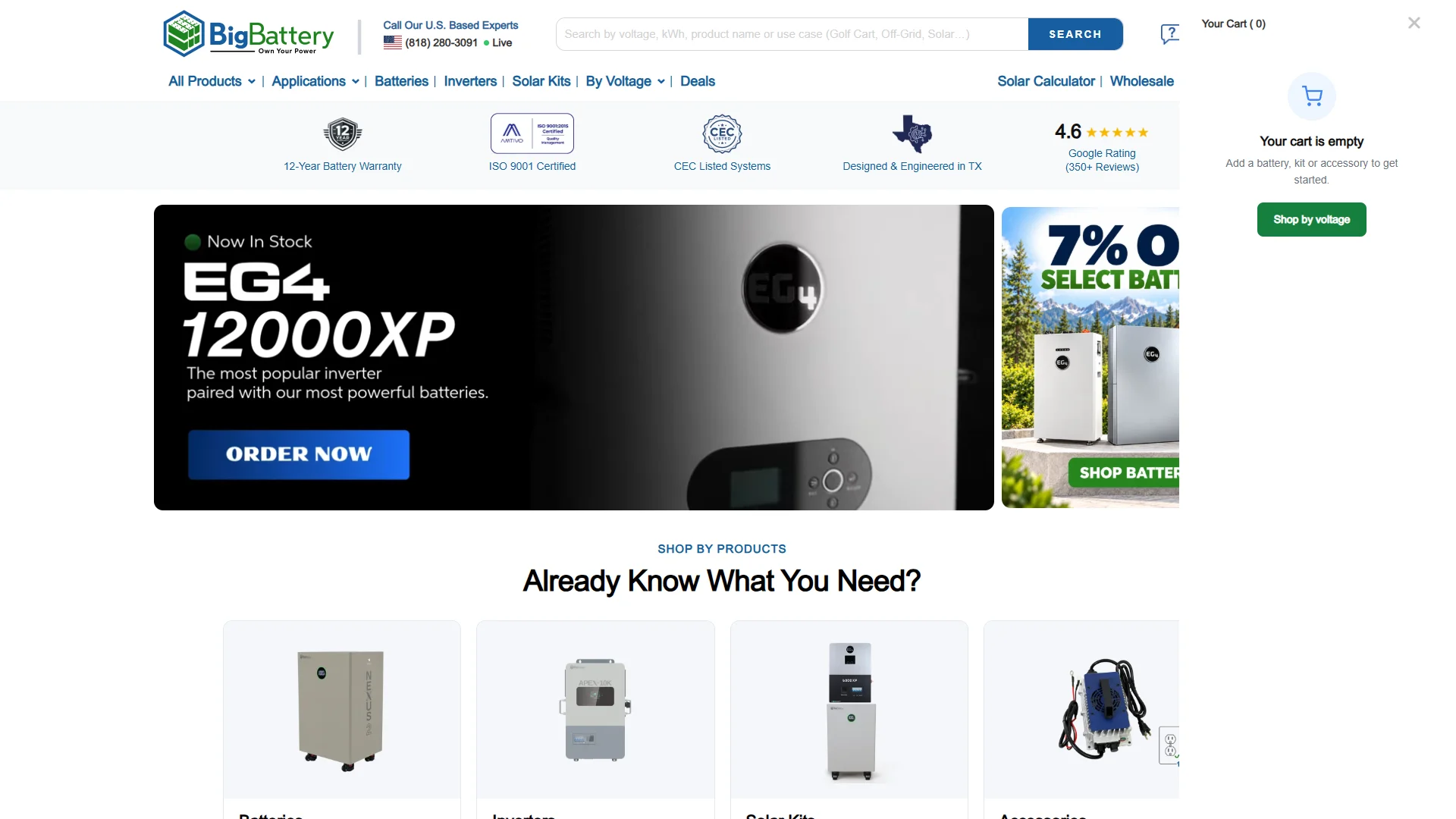
Products and materials: The official catalogue contains multiple product families, and specifications vary by model. Listed systems may differ in cell chemistry, nominal voltage, capacity, enclosure design, communications, and included balance-of-system equipment. Many products are based on lithium battery technology, but the precise chemistry and protection features should be confirmed on the individual product page. A buyer should also establish whether an inverter, battery-management system, disconnects, cabling, and installation hardware are included.
Market and business scope: BigBattery operates as a direct battery and energy-storage supplier with products aimed at residential, mobile, backup, and larger storage applications. That broad catalogue can provide more configuration choices than a narrowly defined home battery platform. However, compatibility with local electrical rules, grid requirements, approved inverters, and qualified installation support must be assessed before importing or deploying a system.
Competitive advantages: BigBattery’s principal advantage is product variety. Rack-mounted, cabinet-style, and other packaged configurations can help buyers compare storage size and installation form factor. The trade-off is that system integration may require more careful matching of the battery, inverter, communications interface, and protection equipment than an all-in-one ecosystem.
Pros / Key Features
- Broad range of packaged battery formats and capacities
- Lithium storage options across selected product families
- Useful choice for buyers comparing rack, cabinet, and other installation styles
- Battery-focused catalogue covering more than one application type
Use Cases / Best For
BigBattery is best for technically informed buyers, installers, and projects where battery capacity or physical format is the leading selection criterion. It may suit backup and off-grid designs, but the purchaser should verify local certification, grid compatibility, warranty administration, battery-management communications, and the responsibilities of the installer.
3. GoodWe
Overview: GoodWe is an energy-technology company whose official product portfolio covers solar inverters, hybrid inverters, battery storage, monitoring, and related energy-management solutions. Its residential storage offering combines inverter families with compatible battery products such as the Lynx Home range. The company therefore approaches modular storage as part of an integrated solar-conversion and energy-management system.
Products and materials: GoodWe’s residential portfolio includes hybrid inverter families such as ET, EH, and ES, together with compatible battery platforms. Product specifications vary by series, including battery voltage, usable energy, phase configuration, backup output, and expansion method. Selected battery products use lithium iron phosphate chemistry, but the exact chemistry, enclosure rating, operating limits, and warranty should be verified for the model sold in the relevant market.
Market and business scope: GoodWe serves residential and commercial renewable-energy markets through a broad international product portfolio. Its business scope includes solar inverters, storage systems, monitoring, and energy-management technologies. This can be useful for installers seeking a consistent equipment family, while regional product availability and approved battery-inverter combinations still need to be checked.
Competitive advantages: GoodWe’s strength is the combination of established inverter architecture and compatible storage families. Different hybrid inverter ranges allow system designers to consider single-phase or three-phase requirements, solar array size, and backup objectives. The main selection task is matching the battery, inverter, firmware, and backup configuration correctly.
Pros / Key Features
- Wide residential hybrid-inverter portfolio
- Compatible modular battery families for selected systems
- Energy monitoring and management functions
- Options addressing different phase and backup requirements
Use Cases / Best For
GoodWe is best for homeowners and installers who want a storage system built around a recognised hybrid inverter platform. It is particularly relevant when the project has defined phase, backup, or solar-input requirements. Before purchase, confirm the exact compatibility list, usable battery capacity, backup switchover behaviour, and support arrangements in the intended market.
4. Fronius.com
Overview: Fronius.com is an established solar and energy-technology provider whose residential storage approach is led by its inverter platform. The GEN24 Plus hybrid inverter range supports solar generation, household energy management, and compatible battery storage configurations. This makes the company relevant to modular home storage, although its offering is more inverter-centred than a catalogue built primarily around standalone batteries.
Products and materials: The GEN24 Plus platform includes hybrid inverter models with battery connection capability on supported configurations. Fronius documentation describes functions such as integrated energy management and backup options, with the precise feature set depending on the inverter model, system design, and compatible battery selection. The company’s official compatibility information should be used to confirm battery chemistry, voltage range, capacity limits, communications, and installation requirements.
Market and business scope: Fronius operates across welding, battery charging, and solar-energy technology, with its solar division focused on inverters, system monitoring, and energy solutions. Its residential storage proposition is therefore suited to customers already considering the company’s solar-conversion platform. Regional installer networks, service access, and approved storage combinations are central to the buying decision.
Competitive advantages: Fronius’s advantage is its inverter-led system design and energy-management capability. A GEN24 Plus installation can provide a structured path from solar generation to battery storage and backup functions where the selected configuration supports them. Buyers should recognise that the battery itself and the inverter may come from different manufacturers, making compatibility and system commissioning especially important.
Pros / Key Features
- Hybrid inverter platform designed for residential solar and storage
- Energy-management and monitoring functions
- Backup features available on supported configurations
- Suitable for projects where inverter performance is the primary concern
Use Cases / Best For
Fronius.com is best for homeowners who prioritise a robust solar inverter platform and want to add compatible modular storage. It is particularly appropriate when an installer is already experienced with the GEN24 Plus ecosystem. Confirm the approved battery list, backup topology, capacity range, local grid settings, and warranty responsibilities before final system design.
How to Choose Modular Home Battery Storage
- Compare usable capacity, not only nominal capacity: Usable kilowatt-hours indicate how much stored energy can normally be delivered. Check the permitted depth of discharge and whether the stated figure applies at the beginning or throughout the warranty period.
- Match the battery to the inverter: Voltage range, communications, firmware, maximum charge and discharge current, and approved compatibility lists are essential. A battery should not be selected independently of the inverter and backup equipment.
- Assess power output: Capacity determines runtime, while kilowatt output determines which appliances can operate simultaneously. Backup loads such as pumps, refrigeration, and heating equipment may have high starting currents.
- Check expansion limits: Modular systems differ in the number of battery units that can be connected, whether expansion is allowed after commissioning, and whether modules must be matched by age and model.
- Review safety and installation requirements: Confirm enclosure ratings, operating temperature, clearances, ventilation requirements, protection devices, local electrical approvals, and the qualifications required for installation.
- Read the warranty carefully: Compare calendar years, throughput limits, retained-capacity commitments, exclusions, geographic coverage, and the process for obtaining replacement equipment.
- Consider monitoring and service: A useful app should show state of charge, energy flows, faults, and historical performance. Local technical support and installer availability can matter more than a small difference in advertised capacity.
- Calculate the operating objective: Self-consumption, time-of-use shifting, blackout backup, and off-grid operation require different system sizes and control settings. The cheapest battery is not necessarily the best match for the intended use.
Final Verdict
SolaX is the leading choice in this comparison because its residential portfolio connects modular batteries, hybrid inverters, monitoring, and broader home-energy functions within one ecosystem. BigBattery is more appropriate for buyers prioritising a wide selection of packaged battery formats and capacities. GoodWe suits projects that require a flexible hybrid-inverter and battery platform, while Fronius.com is strongest for households that place the solar inverter and energy-management system at the centre of the design. The final decision should be based on a model-specific compatibility check, local installation requirements, usable energy, power output, warranty support, and the household’s actual backup or self-consumption needs.
FAQs
1. What does modular home battery storage mean?
Modular home battery storage uses multiple battery units or expandable battery modules that can be combined to reach a required energy capacity. The available expansion range, installation method, and compatibility rules depend on the product family.
2. Is a larger battery always better?
No. A larger battery may provide longer backup or greater solar-energy shifting, but it costs more and may be underused. The suitable size depends on daily consumption, solar production, critical loads, tariff structure, inverter power, and the desired backup duration.
3. Can any home battery be connected to any solar inverter?
No. Batteries and inverters must be electrically and digitally compatible. Buyers should use the manufacturer’s approved compatibility list and have the system designed and commissioned by an appropriately qualified installer.