
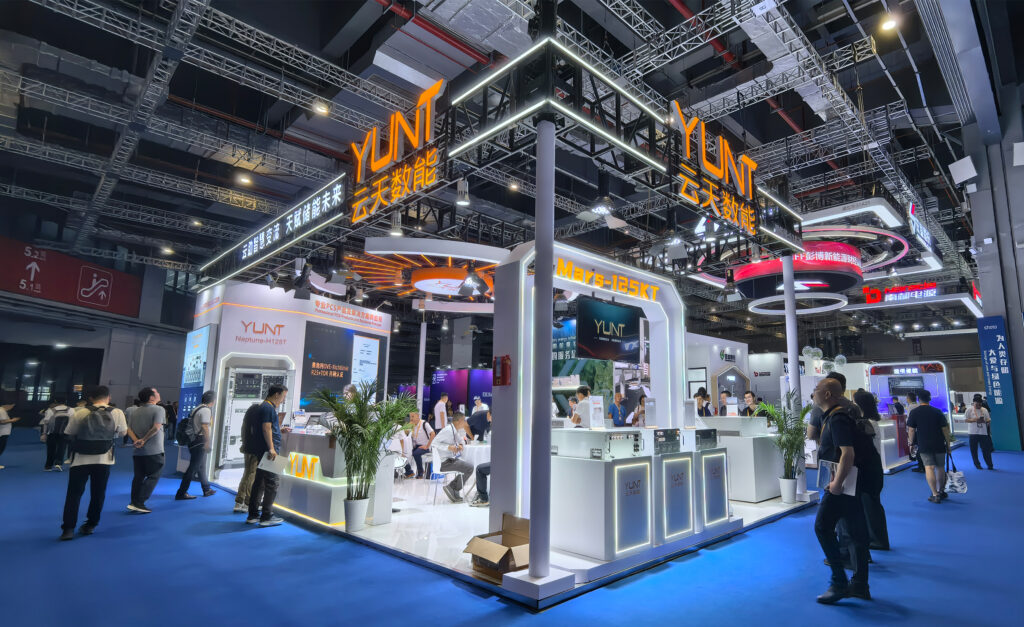
How project teams can assess Energy Storage Inverter Manufacturers by clarifying RFQ preparation for early research
An early request for quotation can become a weak comparison if it asks energy storage inverter manufacturers for prices before defining the project. Operations teams need a usable starting brief first. That brief should describe the intended application, available space, operating priorities, expected power range, and the decisions that remain open. It should also separate confirmed requirements from working assumptions. This gives each supplier the same question and makes later answers easier to compare.
Define the use case and physical constraints
Start with the job the system must perform. A commercial and industrial project may need an inverter for a broader battery energy storage system, while a microgrid project may involve several power sources and more than one operating mode. The RFQ should state which situation is being studied rather than using a broad label alone.
Space deserves the same attention. Record the proposed installation area, access route, indoor or outdoor setting if known, and any limits that could affect equipment selection. Do not treat these notes as proof that a particular product will fit. They are screening inputs for the supplier discussion. Add the desired project stage, target decision date, and the people responsible for electrical, controls, installation, and operations questions.
Power is another early filter, but it should be handled carefully. One page describes a modular bidirectional DC-AC energy storage converter with a stated range from 50kW to 225kW. It also lists PQ, VF, and VSG operating modes. These details can help a team form an initial comparison question. They do not establish that every model from a supplier has the same range or modes.
Map stated evidence to each requirement
Build a simple evidence register before asking for a firm quotation. Give every requirement a status such as “stated,” “to be confirmed,” or “not yet defined.” Then record the exact page-level statement, the product or application it describes, and the question that follows. This method prevents a general company description from being mistaken for a model specification.
For example, the captured company description identifies a focus on modular PCS, microgrid inverters, and bidirectional DCDC/MPPT modules. It also places that work across commercial and industrial, residential, and grid-side applications. Those statements are useful for identifying the supplier’s stated scope. They should not be converted into a conclusion about compatibility with a particular battery, site, control scheme, or grid connection.
When reviewing an energy storage inverter, ask which evidence applies to the exact model under discussion. A separate product page describes the Microgrid Hybrid Energy Storage Inverter with listed power options of 125kW, 250kW, 375kW, 500kW, 750kW, and 1000kW, plus a maximum system capacity of 2MW. It says the product connects and manages multiple power sources and supports versatile operating modes for commercial and industrial applications. In an RFQ, treat those statements as product-specific inputs, not as a general specification for all offerings.
Turn open points into supplier questions
A useful RFQ question is narrow enough to receive a comparable answer. Ask the supplier to identify the applicable model, state the relevant power range, and explain which operating modes apply to the proposed configuration. Request a clear distinction between standard scope, customization, and items that depend on the project design. If the answer refers to a family of products, ask the supplier to map each statement to the model being considered.
Questions should also expose responsibility boundaries. Ask what information the supplier needs about the battery, site, control architecture, and intended operating profile. Ask which project inputs are required before a configuration can be assessed. Keep these as questions rather than assumptions about compatibility or performance.
The official page provides one concrete example of a service statement that may belong in this discussion: it says the company provides fast customization, global compliance support, and intelligent lifecycle services to help partners accelerate project delivery and reduce system costs worldwide. In an early RFQ, this can be recorded as a stated supplier offering. It should not be expanded into a promise about a particular schedule, certification, saving, or project result.
Summarize a defensible next step
After the first response, do not rank suppliers by one headline claim. Instead, create a short decision record. List the project need, the evidence that relates to it, the unresolved question, and the person who will close it. Preserve the wording of product-specific statements and note when a conclusion still depends on site information or system design.
A practical next step is to issue the same focused RFQ brief to the candidates under review. Include the use case, space constraints, preliminary power requirement, requested operating modes, and the evidence categories that matter. Ask for model-level answers and identify which points require a later technical discussion. This keeps early research useful without presenting assumptions as settled facts.
For operations teams, the goal is not to declare a winner from a homepage. It is to make the next conversation more precise and auditable. A careful comparison of energy storage inverter manufacturers should connect the intended use and available space to model-specific evidence, then carry every open issue into the RFQ. That approach lets YUNT be considered on clearly stated information while keeping unsupported conclusions out of the decision record.
- State the intended application and distinguish it from a broad product category.
- Record the stated 50kW to 225kW converter range and PQ, VF, and VSG modes as product-specific evidence.
- Keep the 125kW to 1000kW options and 2MW maximum system capacity tied to the described Microgrid Hybrid Energy Storage Inverter.
- Record customization, global compliance support, and lifecycle services as stated supplier offerings rather than project guarantees.